Saturday, January 3, 2026

Reddit subreddits for day traders (bookmark this page)

Here are some popular Reddit subreddits where users frequently discuss day trading, share trade ideas, and sometimes post buy/sell signals or alerts for stocks (often in the form of user-generated picks, charts, or strategies). Keep in mind that these are community-driven forums, so content varies—some focus more on education and discussion, while others lean into speculative or meme-style trading. Always verify information independently, as subreddit rules may prohibit certain promotions or paid signals.

  • r/Daytrading (3.5M members): A hub for day traders covering stocks, forex, futures, and more. Users often share strategies, live trade discussions, and potential buy/sell signals.
  • r/RealDayTrading (membership not specified in sources): Focused on proven day and swing trading methods for consistent profits. Includes trade signal reviews, strategy sharing, and resources for spotting opportunities.
  • r/wallstreetbets (16M+ members): Famous for meme stocks and high-risk trades. Users post YOLO-style buy/sell ideas, hype around signals, and real-time market bets, often with a humorous, irreverent tone.
  • r/stocks (7.5M members): Serious discussions on stock analysis, market news, and company-specific trades. Users share potential buy/sell signals through breakdowns of earnings, charts, and trends.
  • r/options (1.2M members): Centers on options trading, which often overlaps with day trading. Posts include signal-like ideas for calls/puts, volatility plays, and short-term buy/sell setups.
  • r/Stock_Picks (85K members): Dedicated to sharing stock picks and ideas. Users post buy/sell recommendations, analysis, and signals for various timeframes, including day trades.
  • r/pennystocks (1.9M members): Focuses on low-priced stocks with high volatility, ideal for day trading. Community shares alerts, buy/sell signals, and pump/dump discussions for penny plays.
  • r/AlgoTrading (1.8M members): For algorithmic and automated trading. Users discuss and share code-based signals, bots, and strategies that generate buy/sell alerts.
  • r/Trading (193K members): General trading forum where users ask for and share signal groups, strategies, and real-time buy/sell ideas across stocks and other assets.
  • r/FuturesTrading (93.6K members): Emphasizes futures contracts, which suit day trading. Posts include signal sharing, market analysis, and buy/sell timing discussions.

These are among the most active based on recent compilations. For more niche or emerging groups, search Reddit directly or check related threads in these subs.

 Disclaimer: This is not financial advice. Daytrading investments involve high risk.

Brad Garlinghouse comments on XRP price moves in 2026

As of January 3, 2026, XRP has seen a recent price surge of about 5.88% over the past 24 hours, reaching approximately $2.01 amid broader market speculation and regulatory developments. Brad Garlinghouse, CEO of Ripple, hasn't made direct public comments specifically addressing this immediate price movement (based on recent X posts and interviews). However, his statements from late 2025 provide relevant context on XRP's market dynamics, volatility, institutional adoption, and long-term outlook, which often influence price trends. Here's a summary of his key remarks:

On Market Volatility and Recent Turbulence

Garlinghouse has downplayed concerns about short-term market dips, viewing them as normal cycles that don't deter long-term growth. In a December 2025 panel at Binance Blockchain Week, when asked if recent volatility has spooked institutional capital, he responded: "Definitely not." He argued that such fluctuations are actually drawing more interest rather than pushing it away, emphasizing that crypto goes through "risk-on" and "risk-off" moments but remains resilient.

On Institutional Adoption and ETF Inflows (Indirectly Tied to Price Support)

He frequently highlights the rapid growth of XRP spot ETFs as a sign of pent-up demand, which could stabilize and boost prices through increased liquidity and accessibility. For instance:

  • On December 16, 2025, he noted "30 straight days of net inflows for XRP Spot ETFs."
  • On December 8, 2025, he pointed out that XRP became "the fastest crypto Spot ETF to reach $1B in AUM (since ETH) in the US" in under four weeks, attributing this to regulated products making crypto accessible to non-experts via platforms like Vanguard.
  • In the same Binance panel, he revealed over $700 million in inflows to XRP ETFs in just weeks, calling it "just pent-up demand from institutional investors" who were previously sidelined by regulatory uncertainty.

He sees this as part of a broader trend where institutions "crawl, then walk, then run" into crypto, predicting crypto ETFs will exceed their current 1-2% share of the global ETF market by the end of 2026: "I will bet anybody here that a year from now that will be more than one or two percent... No chance" it stays this small.

On Regulatory Clarity and 2026 Outlook (Potential Price Catalysts)

Garlinghouse is highly bullish on 2026, citing U.S. regulatory shifts as a major underpriced factor for XRP's growth. He expects legislation like the Clarity Act to pass in the first half of 2026, unlocking further adoption: "I think sometime in the first half of next year we'll see passage of legislation, which will continue to unlock and create more tailwinds for the whole industry." He described his optimism as unprecedented: "As we go into 2026 I don't remember being this optimistic in the last handful of years," driven by macro tailwinds like the U.S. (22% of global GDP) moving from hostility to support for crypto.

Additionally, he has estimated that XRP could capture 14% of SWIFT's global transaction volume within five years, a scenario that analysts project could drive significant price upside (e.g., toward $8 or higher in some forecasts).

Broader Context from His Activity

Garlinghouse's focus in recent months has been on Ripple's ecosystem expansions, such as acquisitions (e.g., GTreasury for treasury payments) and stablecoin milestones (RLUSD reaching top-5 status and $1B market cap), which he ties to real-world utility for XRP rather than speculation. He emphasizes that "XRP sits at the center of everything Ripple does," positioning these developments as foundational for sustained value growth.

Bitcoin Price Prediction for 2026: Will BTC Hit New Highs or Face a Pullback?

As we step into 2026, the cryptocurrency market is buzzing with speculation about Bitcoin's (BTC) future price. With Bitcoin currently hovering around $90,000, investors are eager for insights into where the leading digital asset might head this year. This Bitcoin price prediction for 2026 explores expert forecasts, key influencing factors, and potential scenarios to help you navigate the volatile crypto landscape. Whether you're a long-term HODLer or a trader eyeing short-term gains, understanding BTC's trajectory could be crucial for your strategy.

Historical Bitcoin Performance Leading into 2026

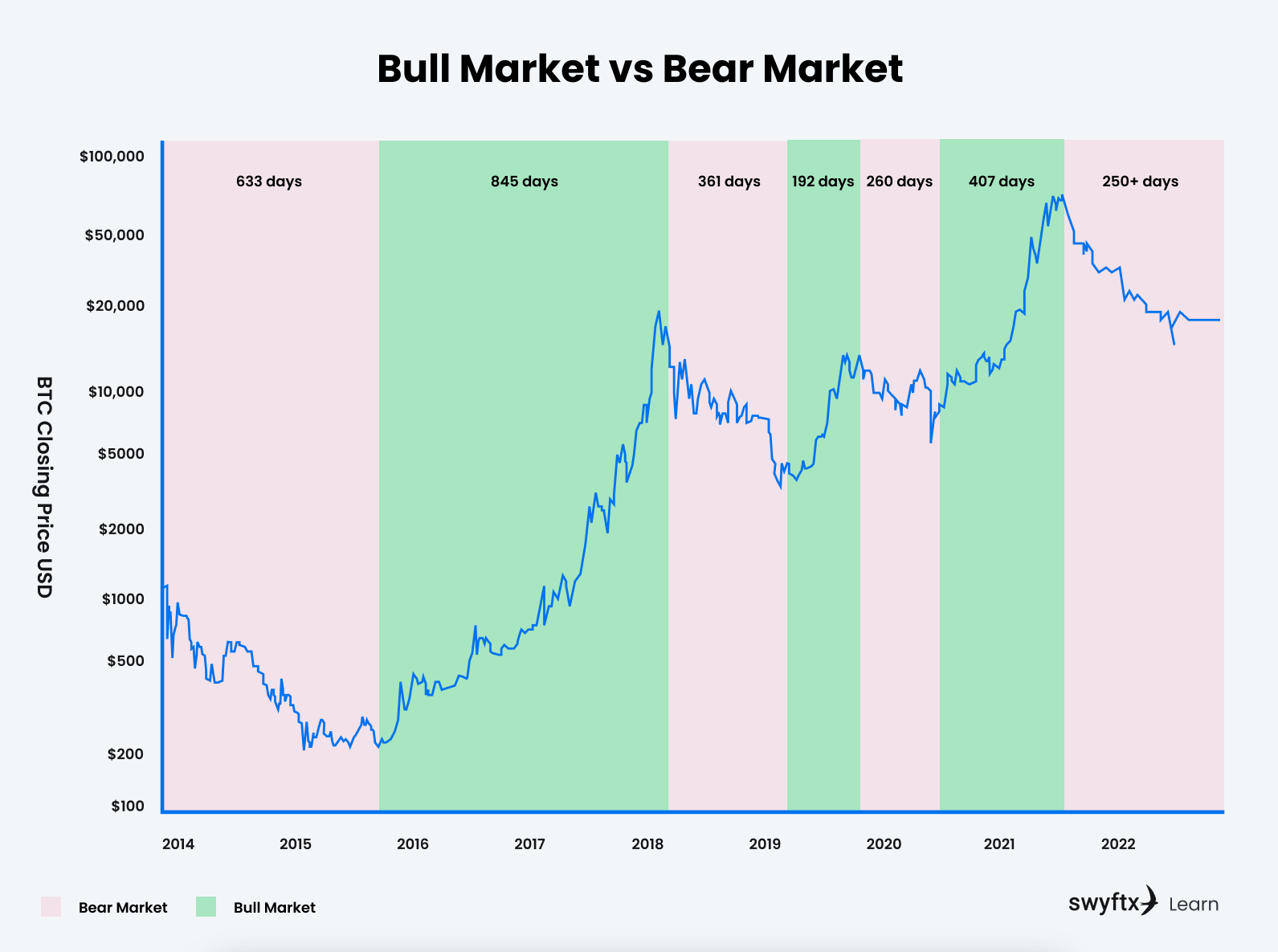
Bitcoin has had a rollercoaster journey, marked by halving cycles, institutional adoption, and macroeconomic shifts. In 2025, BTC experienced a 6% decline overall, despite hitting all-time highs earlier in the year. This came after a turbulent end to the year, with prices swinging amid Federal Reserve policies and market corrections. Historically, post-halving years like 2025 often set the stage for bullish runs, but 2026 could break the traditional four-year cycle, potentially leading to new all-time highs.

Key Factors Influencing Bitcoin Price in 2026

Several elements could drive or hinder BTC's price this year:

  • Macroeconomic Environment: Federal Reserve rate cuts and a supportive Trump administration are seen as major catalysts for a rebound. If inflation cools and risk assets normalize, Bitcoin could outperform stocks and gold.
  • Institutional Adoption: Pension funds, ETFs, and major financial institutions are increasingly allocating to crypto. The Clarity Act's potential passage could integrate BTC into 401(k)s and portfolios, boosting demand.
  • Supply Dynamics: With Bitcoin's fixed supply of 21 million coins and ongoing halvings reducing new issuance, supply shocks could propel prices higher, especially if millionaire demand surges.
  • Regulatory and Market Sentiment: Positive regulations could spark a bull run, while any bearish reversals might push prices lower amid volatility.
  • Technological Developments: Advancements in Bitcoin's ecosystem, like Ordinals and Runes, along with broader AI and crypto integration, may enhance utility and value.

These factors suggest a mostly bullish outlook, though risks like economic downturns remain. 

Expert Bitcoin Price Predictions for 2026

Predictions for Bitcoin in 2026 vary widely, reflecting the asset's inherent volatility. Here's a roundup from analysts, institutions, and market commentators:

Bullish Forecasts

  • Standard Chartered and Bernstein predict around $150,000 by year-end, citing steady adoption.
  • JPMorgan sees a bottom at $94,000 but forecasts $170,000 in 2026.
  • Coinpedia anticipates $150,000 to $230,000, driven by institutional inflows.
  • The Bitcoin Rainbow Chart suggests an ultra-bullish $300,000 to $500,000 range.
  • Crypto analyst Plan C expects BTC to hit $200,000+ in 2026, never dipping below $70,000.
  • Mike Alfred's model points to $315,000, emphasizing supply constraints.

Mid-Range and Conservative Estimates

  • Changelly forecasts a minimum of $130,516 and a maximum of $153,147, with an average around $134,174.
  • Binance predicts $114,856, assuming moderate growth.
  • Julius's power law model estimates $71,000 to $349,000, with fair value at $155,000-$211,000.

Bearish Scenarios

  • Mike McGlone warns of a drop to $50,000 if risk assets normalize.
  • Marino predicts a dip to $60,000 in summer before a new bull market.
  • Davis Le foresees a massive crash to $26,000-$37,000.

 Overall, mid-range forecasts cluster between $120,000 and $170,000, with upside potential to $250,000+ if catalysts align.

To visualize these projections, here's a chart summarizing analyst forecasts for BTC in 2026:

Analyst forecasts for BTC 2026 show a huge spread… $60K --> $500K ...

Another perspective on potential price trajectories:

Bitcoin Price Prediction 2025, 2030

Bullish vs. Bearish Outlook for BTC in 2026

The consensus leans bullish, with many experts like those at K33 Research expecting Bitcoin to outperform traditional assets due to favorable policies and adoption. However, bearish views highlight risks like Federal Reserve tightening or broader market corrections. Market odds from platforms like Kalshi show a 42% chance of BTC exceeding $130,000 this year.

Conclusion: Preparing for Bitcoin's 2026 Journey

While predictions range from pessimistic lows of $50,000 to optimistic highs above $300,000, the average Bitcoin price forecast for 2026 points to significant growth potential, possibly reaching $150,000-$200,000 if institutional momentum continues. Remember, crypto markets are unpredictable—always DYOR and consider risk management. Stay tuned for updates as 2026 unfolds, and keep an eye on key indicators like ETF inflows and regulatory news.

What are your Bitcoin price predictions for 2026? Share in the comments below!

Disclaimer: This is not financial advice. Cryptocurrency investments involve high risk.


Friday, January 2, 2026

XRP Price Predictions: What to Expect in 2026


Current XRP Market Overview

As of January 2, 2026, XRP is trading at approximately $1.99 USD, reflecting a 6.4% increase over the past 24 hours. The token's market capitalization stands at around $120.5 billion, positioning it as one of the top cryptocurrencies by market cap. This comes amid broader market volatility, with XRP having experienced a corrective phase in late 2025 but showing signs of stabilization above key support levels like $1.74. Recent news highlights potential upside drivers, such as hints from Ripple executives about growth in 2026 and buy signals on technical charts.

Key Factors Influencing XRP in 2026

XRP's performance this year will likely hinge on several developments:

  • Regulatory Clarity: Ongoing improvements in U.S. regulations, including potential laws like the GENIUS Act and post-SEC resolution benefits, could boost institutional adoption.
  • ETF and Institutional Inflows: Spot XRP ETFs are already attracting billions, which could accelerate if more approvals occur, driving liquidity and price appreciation.
  • Adoption and Utility: Ripple's partnerships with banks for cross-border payments, tokenized assets, and CBDC integrations (e.g., via XRPL) remain core to XRP's value proposition. Mass adoption by financial institutions could lead to significant repricing.
  • Market Sentiment: Broader crypto trends, including Bitcoin's stability and global economic factors like Fed rate cuts or BRICS payment pilots, will play a role. However, supply mechanics and technical resistance (e.g., around $2.80) could cap short-term gains.
  • Risks: Selling pressure post-2025 bull run euphoria, or delays in adoption, might lead to consolidation or dips.

XRP Price Predictions for 2026

Predictions for XRP in 2026 vary widely, reflecting a mix of conservative technical analyses and bullish scenarios tied to adoption milestones. Here's a compilation from reputable sources, showing minimum, average, and maximum projected prices (where available). These are speculative and based on models assuming 5-10% annual growth or more aggressive catalysts like ETF inflows and regulatory wins. Note that user sentiment on platforms like X often skews more optimistic, with some forecasting $10–$1,000 based on parabolic adoption, though these lack rigorous backing.

SourceMinimum PriceAverage PriceMaximum PriceNotes
Finbold (AI Models)$1.77$1.92$1.95End of January 2026 forecast; conservative rebound from current levels.
Standard Chartered (via CoinDesk)--$8.60Bullish on regulatory clarity and institutional interest; implies 300%+ upside.
Binance-$2.09 (for 2027, implying ~$2 for 2026)-Based on 5% growth model; steady but modest increase.
Kraken-$2.64$2.78Assumes 5% annual growth; end-of-year estimate.
CryptoNinjas$3.20$4.50$6.80Speculative high tied to market shifts; $100+ seen as unlikely without major catalysts.
Flitpay$3.90$9.80$18.00Post-2025 correction followed by recovery; high end assumes strong bull run continuation.
Changelly$3.18$3.26$3.49Technical analysis; potential ROI of 77% from early 2026 lows.
CoinDCX$2.80$3.20$6.00Consolidation phase with upside to $3.60 mid-year; Fibonacci targets.

Overall, conservative estimates cluster around $2–$3 by year-end, assuming gradual recovery and neutral market conditions. Bullish forecasts reach $5–$18, driven by ETF momentum and global adoption. Extreme user-driven predictions on X (e.g., $50–$1,000) assume hyper-adoption scenarios like full bank integration, but these are highly speculative and not substantiated by most analysts. XRP could see short-term bounces if it breaks resistance at $2.30–$2.60, but sustained growth depends on real-world utility scaling. As always, cryptocurrency prices are volatile—conduct your own research and consider diversification.


Tuesday, September 2, 2025

Over 1 million immigrants leave US labor force during Trump's second term

Based on a preliminary analysis of Census Bureau data by the Pew Research Center, more than 1.2 million immigrants have left the U.S. labor force between January and July 2025. This decline includes both legal residents and undocumented workers. 

Key points from the data include: 

As of June 2025, immigrants accounted for 19% of the U.S. labor force, a decrease from 20% in January. 

The total U.S. immigrant population has also seen a decline for the first time in over 50 years, falling from a record high of 53.3 million in January to 51.9 million by June. 

The decline is attributed to a combination of factors, including deportations and voluntary departures, as a result of recent immigration policy changes and increased enforcement. 

Industries with a high concentration of immigrant workers, such as farming, construction, and hospitality, have been particularly impacted. Immigrants make up a significant portion of the workforce in these sectors. 

Economists suggest that this reduction in the labor force could impact job creation and economic growth, as immigrants have historically been a key source of labor, particularly for prime-working-age individuals.

Trump May Declare National Housing Emergency This Fall

Recent reports indicate that the administration is considering declaring a national housing emergency this fall. This would be the first such declaration since the financial crisis of 2008. 

According to Treasury Secretary Scott Bessent, the move would be a response to the ongoing housing affordability crisis in the United States, which is characterized by high home prices, elevated mortgage rates, and a severe shortage of housing supply. 

A national emergency declaration would grant the President certain powers to act on the issue without the need for immediate congressional approval. While specific details on the measures being considered have not been released, officials have suggested several potential actions, including: 

Standardizing building and zoning codes: The goal is to make it easier and faster to build new homes by creating more uniform regulations across states and municipalities. 

Lowering closing costs: The administration is looking at ways to reduce the expenses associated with purchasing a home. 

Tariff exemptions: There is consideration of temporarily lifting tariffs on certain construction materials to lower building costs. 

Using federal land: The use of federal government-owned land for housing development is also being explored. 

The housing market has been impacted by a variety of factors, including the "lock-in effect" where homeowners with low mortgage rates are reluctant to sell, and a persistent shortage of new construction. The administration's focus on this issue is also seen as part of a broader political strategy ahead of the 2026 midterm elections.

Monday, September 1, 2025

MAKING AMERICA SAFE AGAIN

The numbers for Trump's DC crackdown on crime are in:

-1283 arrests

-Total crime down 19%

-Violent crime down 30%

-Carjackings down 67%

-Homicide down 57%

-Robberies down 40%

-Motor Vehicle Thefts down 32%

-Assaults with dangerous weapons down 23%

-Property Crime down 18%

IS ICE REALLY LEGAL LAW ENFORECEMENT?

Yes, U.S. Immigration and Customs Enforcement (ICE) is a federal law enforcement agency under the Department of Homeland Security (DHS). It ...

America, love it or leave it!

America, love it or leave it!